
Bay Commercial Roofing Ltd.
Bay Roofing and Exteriors Ltd. installs and replaces commercial roofing systems in North Bay, Sudbury and Muskoka and surrounding areas.
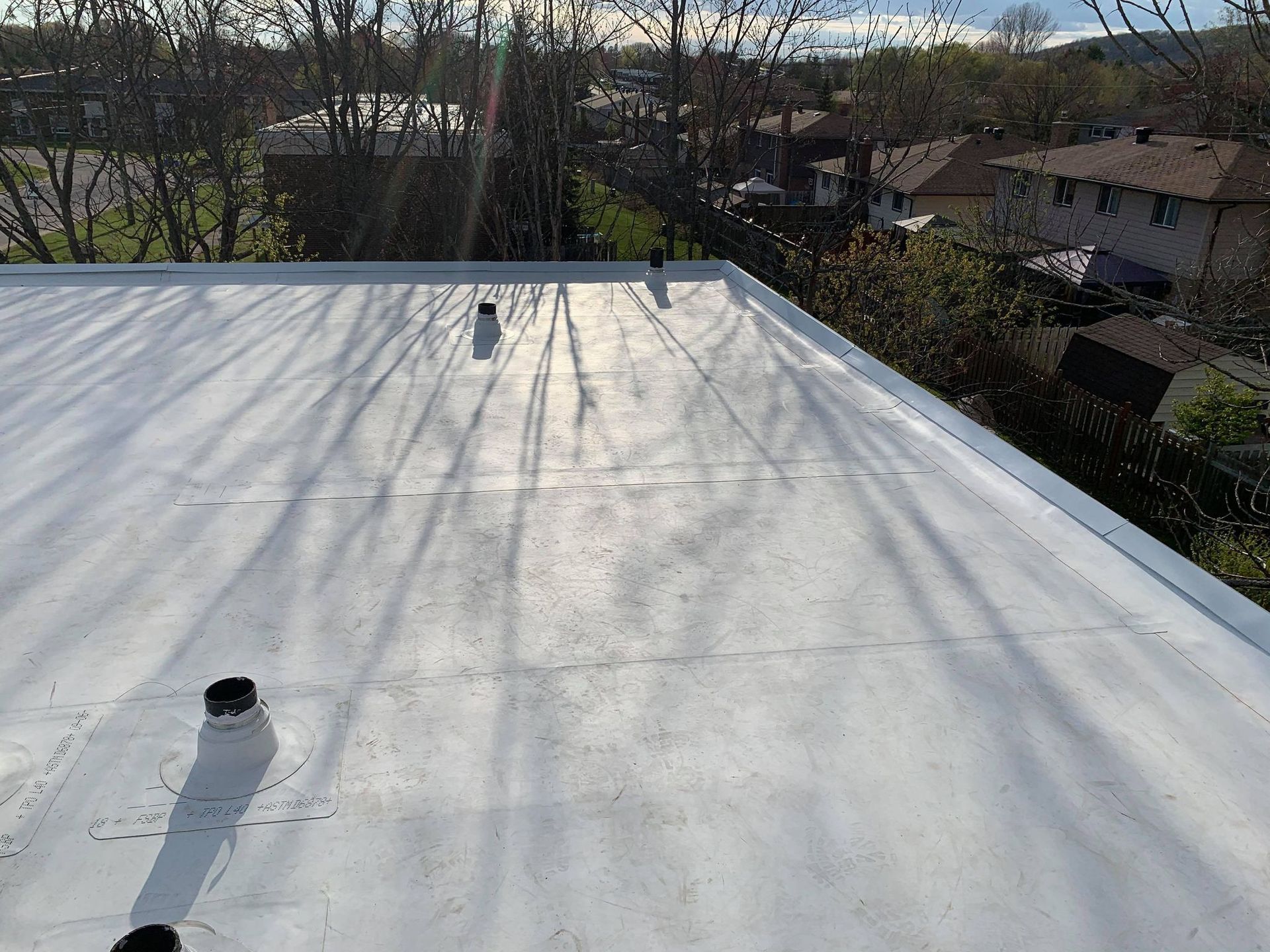
Your commercial building in North Bay, Sudbury, Muskoka and surrounding areas faces seasonal freeze-thaw cycles that stress flat roof membranes year after year. You may have noticed pooling water after heavy rain, interior staining near ceiling edges, or peeling membrane seams where heat and cold have pulled materials apart. Bay Roofing and Exteriors Ltd. installs durable flat roofing systems designed to withstand these conditions and protect your building for decades.
We install Mod Bit roofing, a two-ply asphalt-based membrane that is torch-applied to create a watertight seal across low-slope and flat roof surfaces.
We also install TPO roofing, a single-ply synthetic membrane that reflects sunlight, reduces cooling costs, and offers recyclable material at the end of its service life.
Both systems are chosen based on your building's structure, roof slope, drainage patterns, and long-term budget. We conduct leak detection, roof assessments, and maintenance visits to extend the life of your system once it is in place.
If you need a roof inspection or a replacement estimate for your commercial property in North Bay, Sudbury, Muskoka or the surrounding areas, contact us for a free consultation.
When you schedule a commercial roofing project in North Bay, Sudbury, Muskoka and the surrounding areas, our crew begins by removing damaged membrane layers, inspecting the roof deck for rot or structural weakness, and repairing any compromised sections before installing new material. For Mod Bit installations, we torch-apply each ply to bond it directly to the substrate, creating a seamless barrier that resists water infiltration. For TPO installations, we use heat-welded seams that fuse the membrane together at the molecular level, forming a continuous surface that does not rely on adhesive tapes or fasteners alone.
After installation, you will notice that standing water drains more quickly, interior leaks stop entirely, and your heating and cooling systems run more efficiently due to improved insulation and reflective roofing surfaces. TPO membranes reflect sunlight, which lowers roof surface temperatures and reduces the load on your air conditioning system during summer months.
We also coordinate roofing work with eavestrough, soffit, fascia, and siding repairs to address water management and exterior wear at the same time. This approach prevents new roofing from being compromised by failing drainage or deteriorating trim. We provide financing options to help you manage project costs without delaying necessary repairs.
How Flat Roofing Membranes Are Installed
Questions You May Have Before Moving Forward
Commercial roofing involves structural decisions that affect your building's safety, energy costs, and long-term maintenance expenses. These questions cover the practical details you should understand before scheduling a project.
What is the difference between Mod Bit and TPO roofing?
Mod Bit is a torch-applied asphalt membrane that creates a thick, durable seal on low-slope roofs, while TPO is a heat-welded synthetic membrane that reflects sunlight and reduces cooling costs. Your choice depends on roof slope, budget, and whether energy efficiency is a priority.
How long does a commercial roof replacement take?
Most commercial roofing projects in North Bay take between three and seven days, depending on roof size, weather conditions, and the extent of deck repairs required before membrane installation. We schedule work to minimize disruption to your business operations.
What happens if the roof deck is damaged?
We inspect the roof deck during membrane removal and replace any sections weakened by water damage or structural wear. Deck repairs are included in your estimate and completed before the new membrane is installed.
Why does water pool on flat roofs?
Water pools when drainage systems are blocked, roof slopes are too shallow, or membrane surfaces sag due to deck deflection. We assess drainage during inspections and adjust slope or install additional drains to prevent standing water.
How often should commercial roofs be inspected?
You should schedule inspections twice a year, typically in spring and fall, to catch membrane damage, seam separation, or drainage issues before they cause leaks. Regular inspections extend roof life and reduce emergency repair costs.
Bay Roofing and Exteriors Ltd. works with businesses across North Bay, Sudbury, Muskoka and the surrounding areas to install and maintain roofing systems that protect inventory, equipment, and interior spaces from water damage and temperature extremes. If your commercial building needs a roof assessment or a replacement estimate, reach out to discuss your project and receive a no-obligation quote.
Protecting Your Investment
We have teamed up with Financeit to offer you worry free financing.
Commercial Roofing Services Across Districts:
Sudbury
Espanola
Whitefish
Wahnapitae
Onaping
Nickel Centre
Capreol
Skead
Valley East
Markstay
Azilda
Lively
Copper Cliff
Warren
Muskoka
Dorset
Huntsville
Dwight
Baysville
Bracebridge
Gravenhurst
Bala
Port Carling
Mac Tier
Severn Bridge
Lakewood
Rosseau
Burks Falls
Parry Sound
North Bay
Callander
Corbeil
Powassan
South River
Nipissing
Trout Creek
Sundridge
Burks Falls
Strong
Magnetawan
Parry Sound
Eagle Lake
Loring
Arnstein
Golden Valley
Redbridge
Mattawa
Bonfield
Astorville
Tilden Lake
Marten River
Temagami
Verner
Temiskaming Shores
Cochrane
Timmins
Englehart
Iroquois Falls
Espanola
Elliot Lake
Sault Ste. Marie
Algonquin Highlands